
Why Does Bitcoin Trade Parallel to the Stock Market?
$BTC $QQQ

There are conflicting opinions on what drives Bitcoin’s price action. If you're frustrated that Bitcoin practically trades in parallel with the Nasdaq 100, you might be misunderstanding Bitcoin altogether.
Many seem to think Bitcoin is or should be a hedge against the stock market, macro sentiment, or market volatility. Larry Fink suggests that Bitcoin could be seen as a “flight to safety” or “digital gold.” However, what I think is missing from his context is that Bitcoin is a flight to safety from a devaluing government currency, relentless money printing, and unstainable national debt levels. Yes, it’s a hard asset like gold, but digital. So yes, it is technically an inflation hedge.
I think it makes sense that Bitcoin trades similarly to the Nasdaq 100. It’s my opinion that the Nasdaq 100 is also an inflation hedge. Bitcoin is more aligned with the Nasdaq because it is a digital risk asset, trading 24/7 globally based on macro and global sentiment.
A common example is when a surprise missile attack occurs overnight, creating headline risk—futures typically dip, and Bitcoin sells off alongside stocks (for the most part). Bitcoin also sells off due to uncertainty. It’s a natural reaction that when traders or investors get spooked, they flock to cash.
We've heard the argument that Bitcoin trades in correlation with global liquidity. I think that's also true. Bitcoin moves when global capital flows into assets—specifically, risk assets.
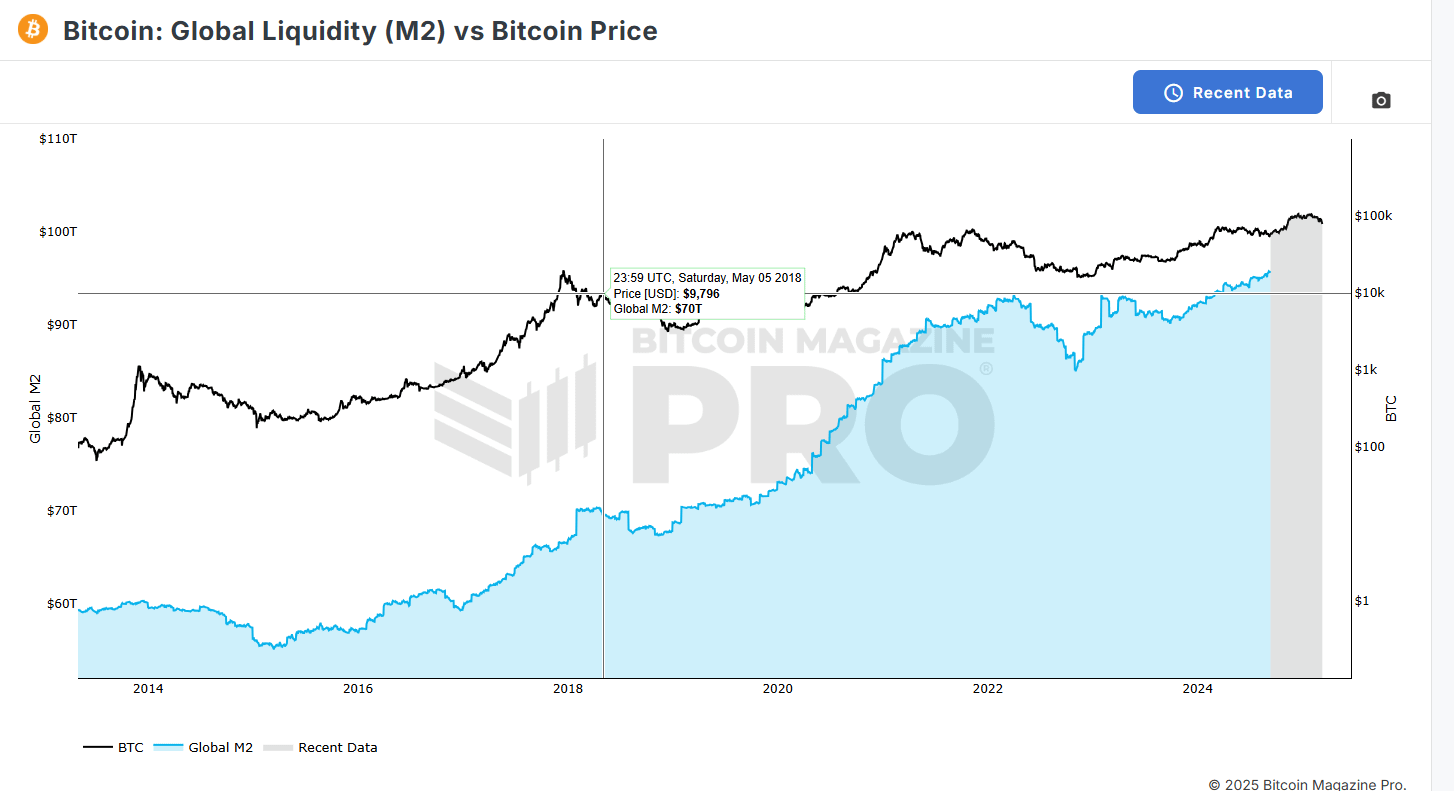
A recent Bitcoin Magazine article* highlights how Bitcoin's price action is deeply tied to global M2 money supply expansion. Historically, when global liquidity increases, Bitcoin rallies alongside risk assets like equities. However, the article also notes that Bitcoin reacts to liquidity shifts with a lag of approximately two months—meaning its price doesn’t immediately respond to changes in money supply. This explains why Bitcoin may not always move in lockstep with global liquidity at any given moment but remains highly correlated over time.
So if it's true that Bitcoin trades in parallel with a risk asset that could also be considered an inflation hedge—like the Nasdaq 100—then Bitcoin should still outperform the Nasdaq 100 over a longer time frame. Bitcoin has also underperformed the Nasdaq 100 during market downturns.
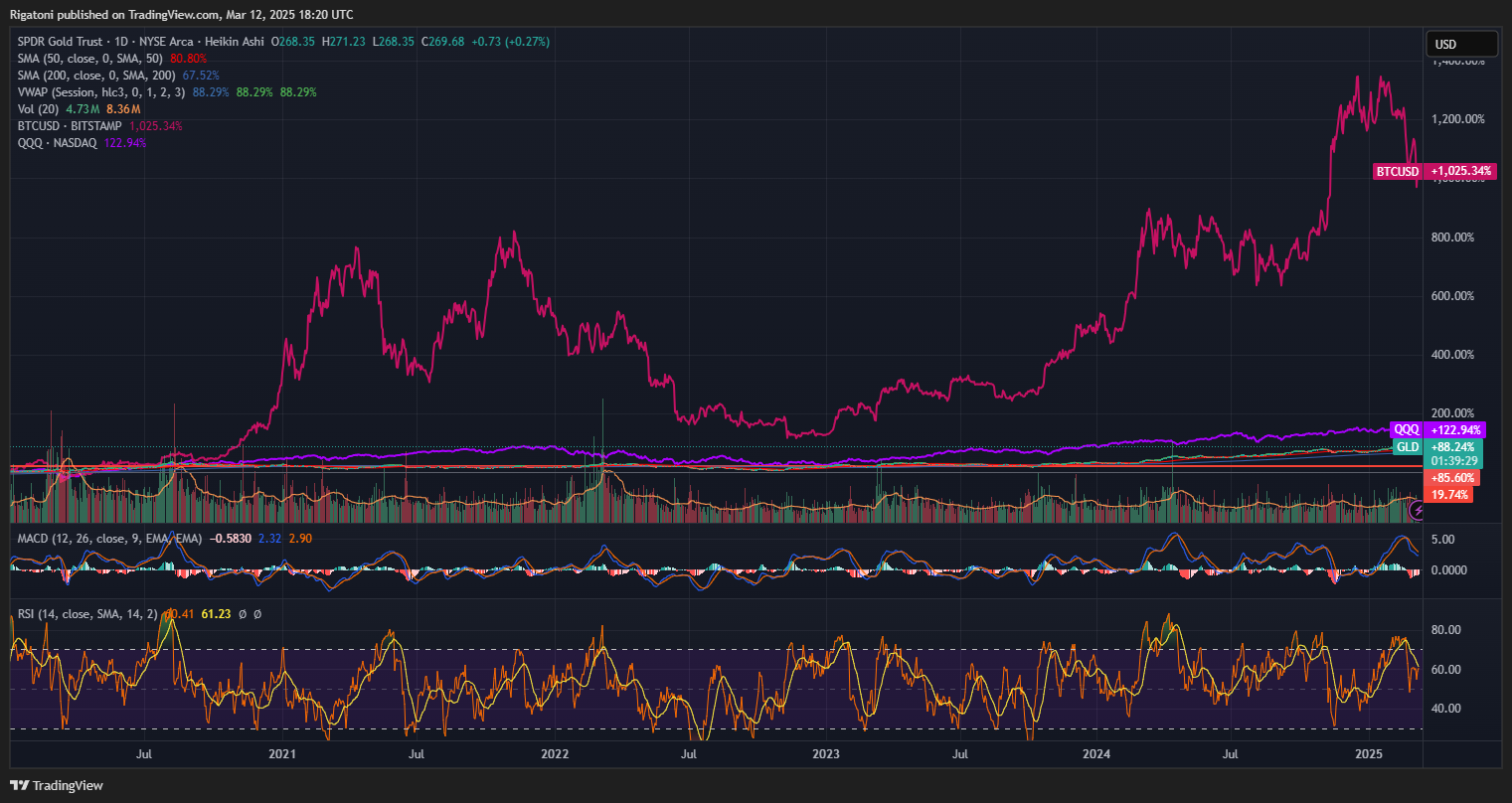
If Bitcoin is "money" and an asset class used to store time and energy, then it should trade like other assets like the S&P, Nasdaq, real estate luxury goods, art, etc.
Bitcoin has outpaced and should continue to outpace the Nasdaq 100. This is largely due to the fact that the Nasdaq 100 is valued at approximately $26 trillion as of December 2024, whereas Bitcoin, as an asset class, is valued at around $2 trillion.
If you're a Bitcoin investor and expected it to trade similarly to gold, you would likely be disappointed by now. But this is precisely why Bitcoin is set to deliver outsized returns compared to gold.
Bitcoin’s volatility is the cost of entry for achieving superior returns.
In other market news
We saw a nice bounce in stocks today, with the Nasdaq up 1.22%. However, it’s way too soon to feel relieved or excited that we have bottomed.
If stocks were oversold in the short term and rallied off of a 2.8% CPI number, that might make sense—but only as a short-term reaction.
As a long-term investor, I’d suggest ignoring most economic data and geopolitical headlines and focus instead on earnings. If you missed some of the Q4 2024 earnings reports/calls, it would be worth going back to review specific businesses and their guidance.
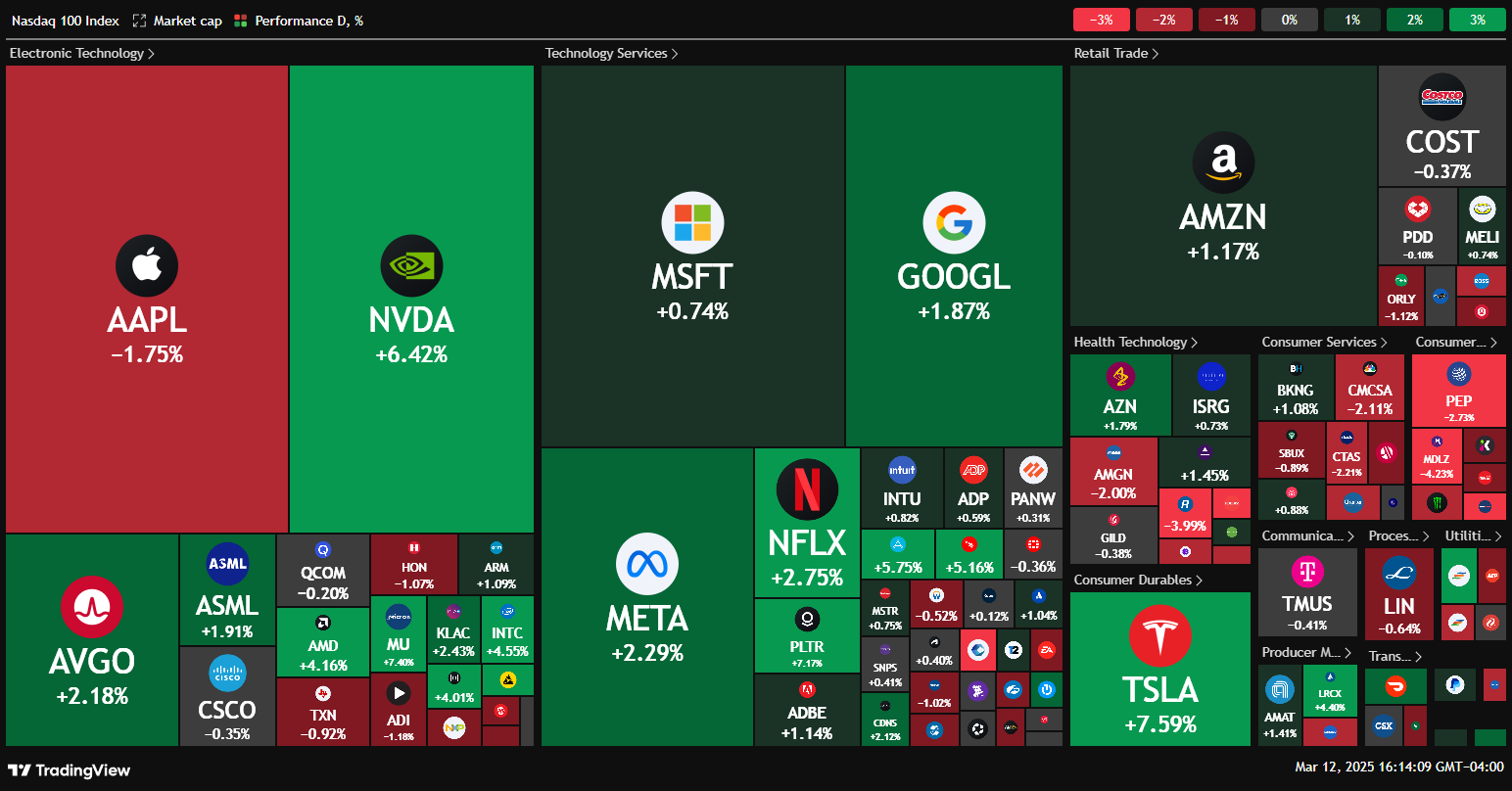
In case you missed:


References:
https://bitcoinmagazine.com/markets/global-liquidity-fuels-bitcoin-price
Disclaimer: This blog is for informational purposes only and does not constitute financial advice. All opinions are my own, and I am not a financial advisor. The information provided reflects my personal views and is intended to encourage discussion and thought among readers. Investments involve risk, including the loss of principal, and past performance is not indicative of future results. Always conduct your own research or consult with a qualified professional before making any financial decisions.